Arrival
Approach a single, legible landing point beside the door.
 Built by Zhen
Archive / theory study · Earlier threshold development
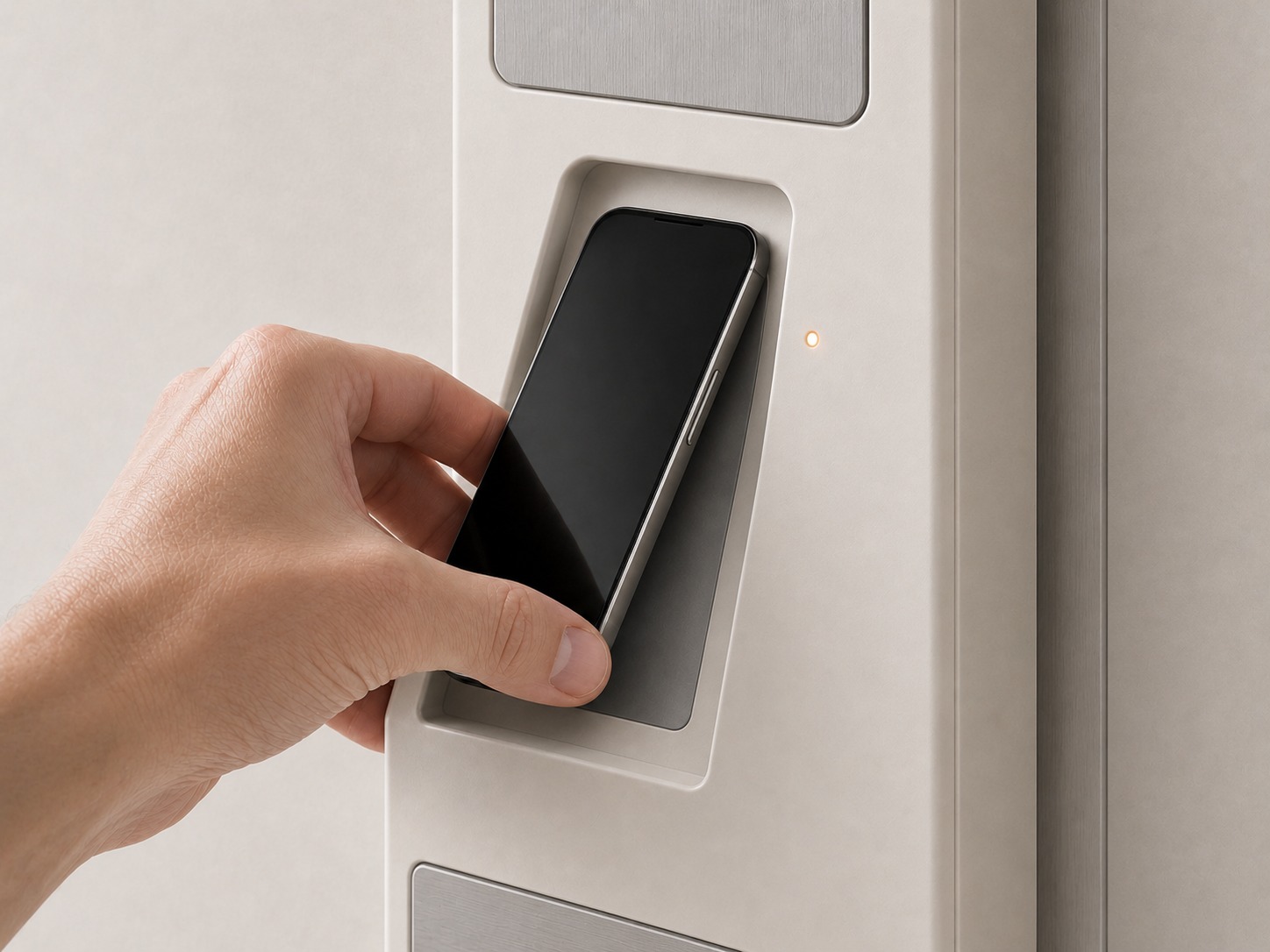
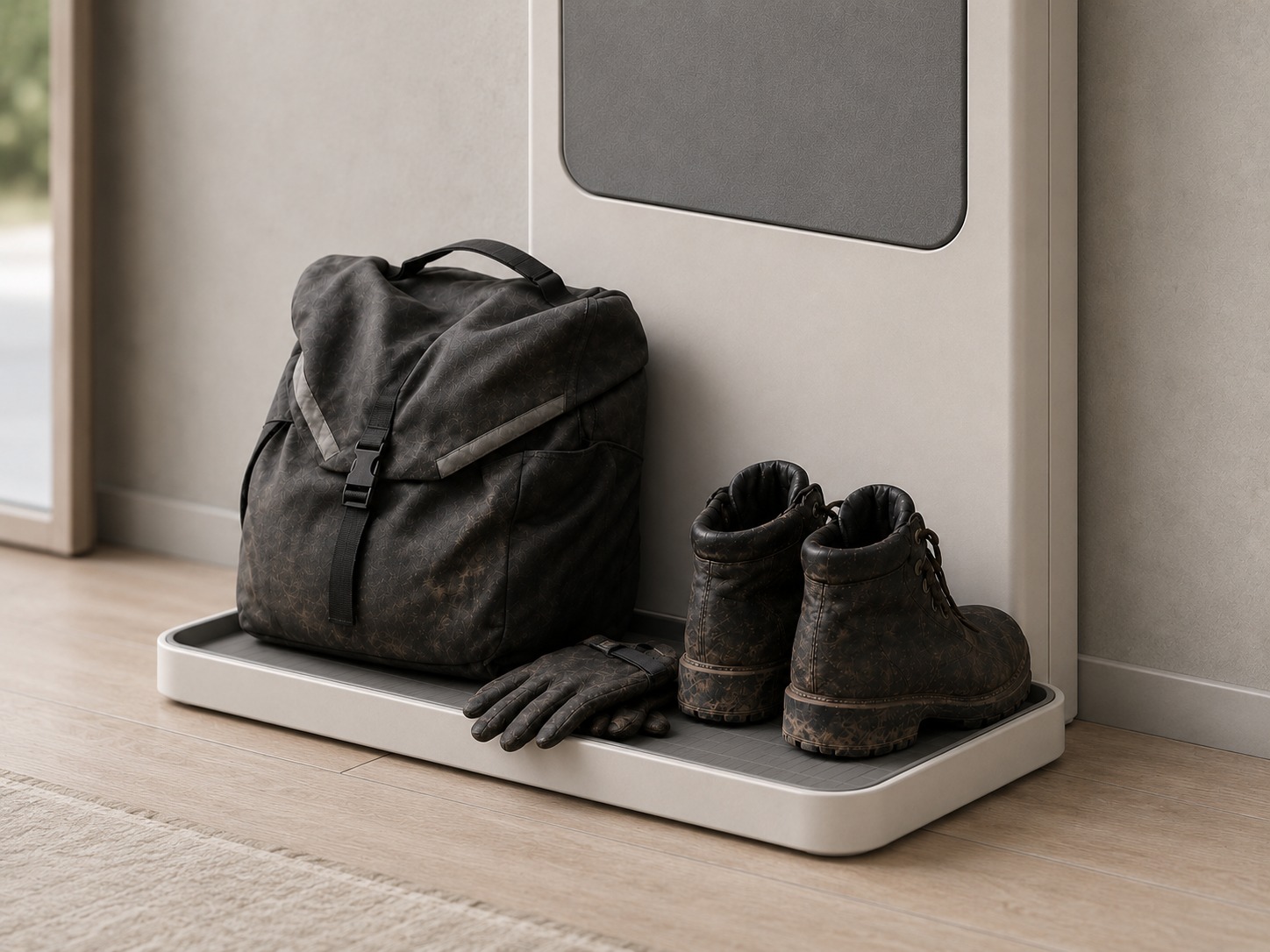
An earlier wall-adjacent study of arrival: unload what you carry, dock the phone, pause against the surface, and reset before moving further into the home.
Arrival sequence
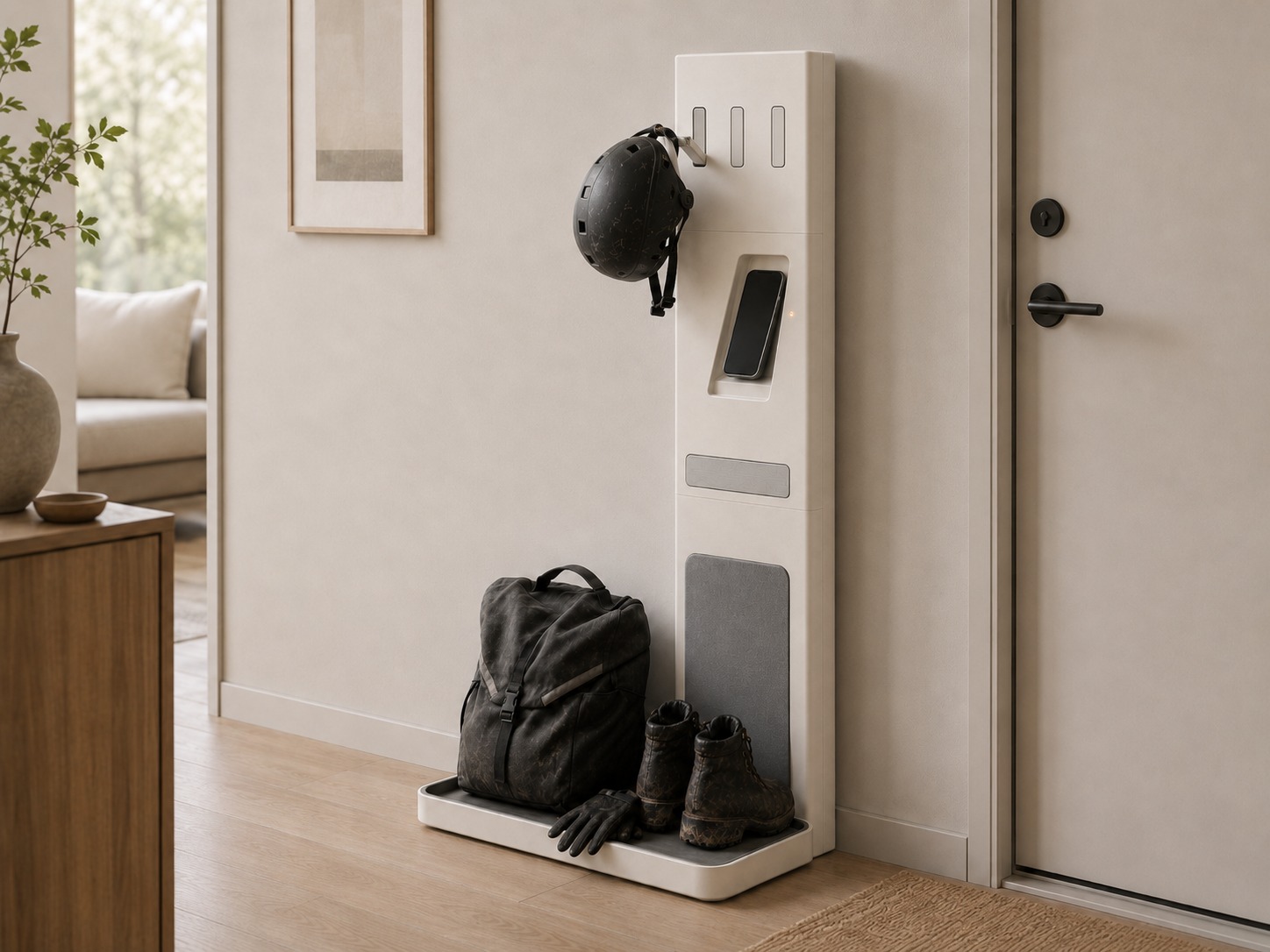
The study treats the entryway as a behavioral threshold rather than a storage problem alone. Each zone supports one simple action while the object remains visually quiet.
Approach a single, legible landing point beside the door.
Place bags, helmet, keys, and everyday carry without scattering them through the room.
Park and charge the phone in a recessed slot instead of carrying the screen further inside.
Use a soft contact zone while changing shoes or reorganizing gear.
Leave footwear and wet or heavy items at the lower washable base.
Core system
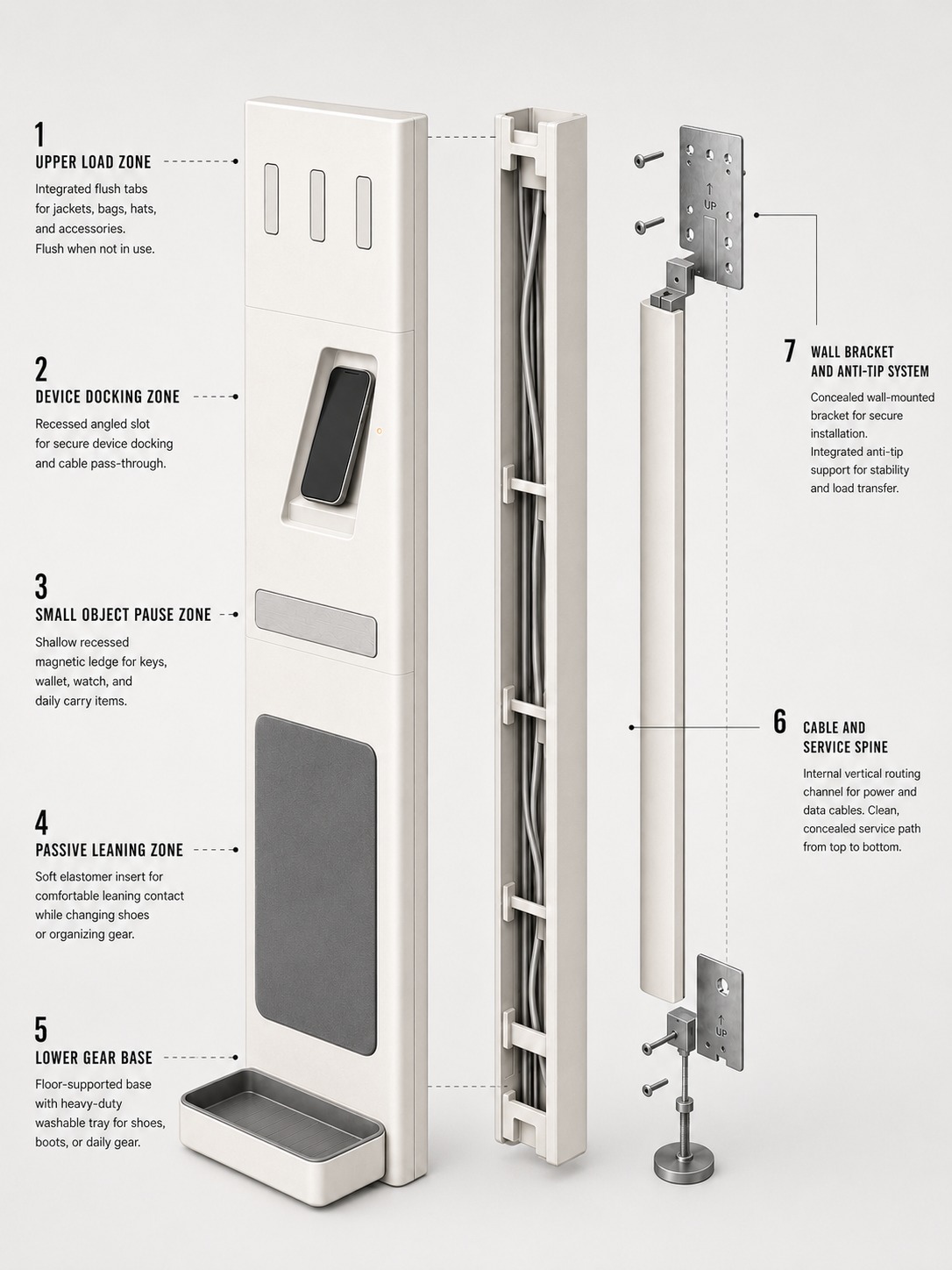
The front face is divided by behavior; the rear spine carries cable routing, bracketry, and anti-tip support. The shift from embedded architecture to a wall-adjacent object made the concept easier to install, service, and understand.
Two defining details