Related development · Earlier threshold study · V2.3

Vertical Threshold Spine

A wall-adjacent threshold utility rail for unloading, docking, and pausing at the domestic entrance.

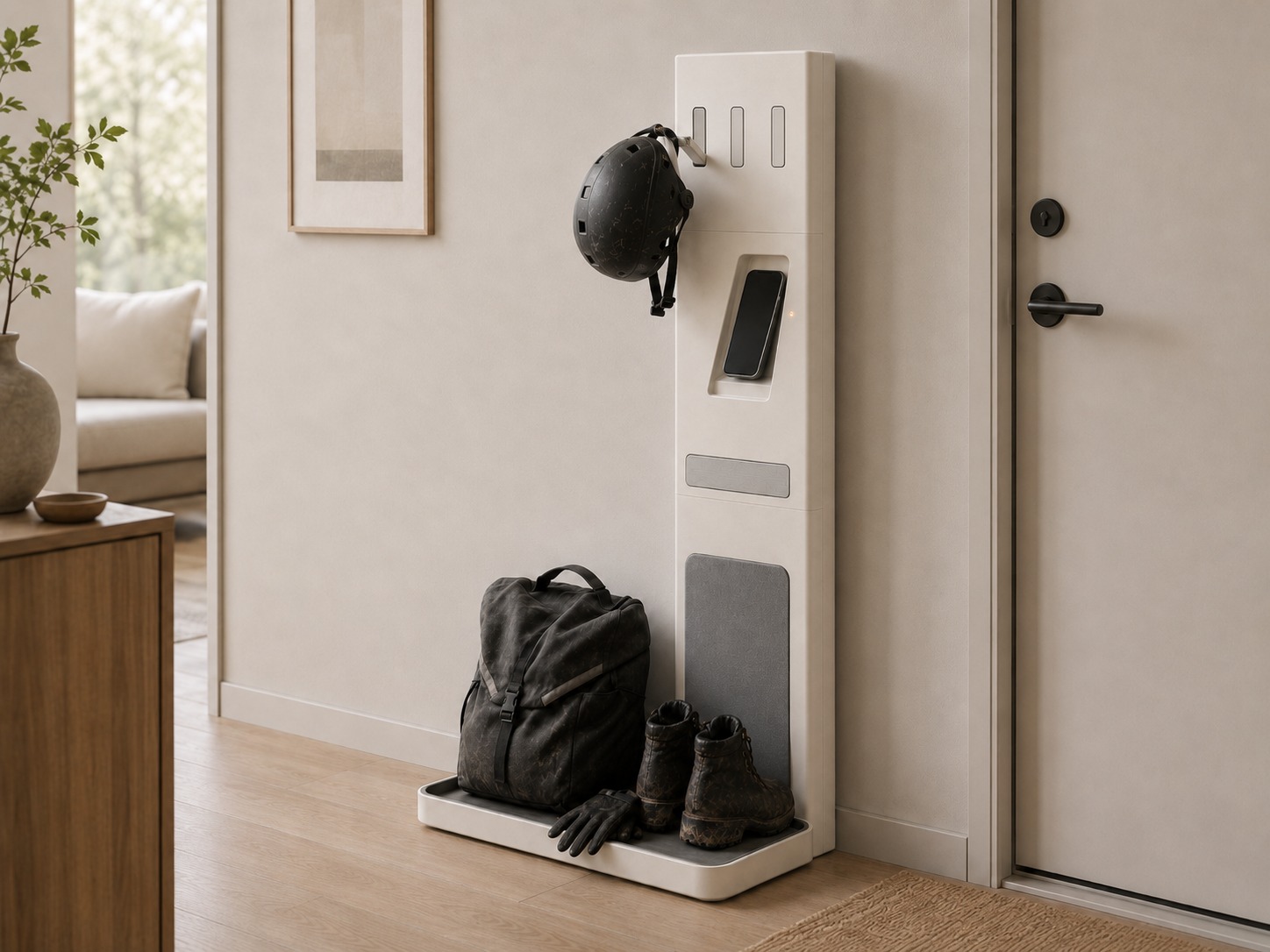
Vertical Threshold Spine V2.3 installed beside an apartment entryway with helmet, phone dock, bag, gloves, and boots.
V2.3 contextual entryway scene. The spine now reads as a usable wall-adjacent threshold object rather than a hidden wall system.
Status

Developed concept / V2.3 visual outcome

Focus

Arrival ritual, unloading, docking, leaning support, lower gear storage

Methods

CAD-led development, exploded assembly logic, service-path planning, behavioral choreography

Relationship

Earlier companion study to ENTRY

Project shift

From speculative wall infrastructure to a surface-mounted domestic object.

Vertical Threshold Spine began as a theory study on post-work decompression and the quiet rituals of returning home. In this version, the project moves away from a fully embedded wall system and becomes a clearer wall-adjacent object that can be installed, supported, wired, maintained, and understood.

The result keeps the original emotional premise — arrival as a moment of release — but gives it a more legible physical structure: a vertical spine for daily carry items, device charging, passive body contact, and lower gear placement.

Context of use

The threshold spine becomes legible once everyday gear is placed around it.

Full entryway scene showing Vertical Threshold Spine supporting a helmet, docked phone, bag, gloves, and boots near the apartment door.
Contextual entryway scene. Helmet unloading, phone docking, lower gear storage, and the leaning pad are shown as one calm arrival system.

System architecture

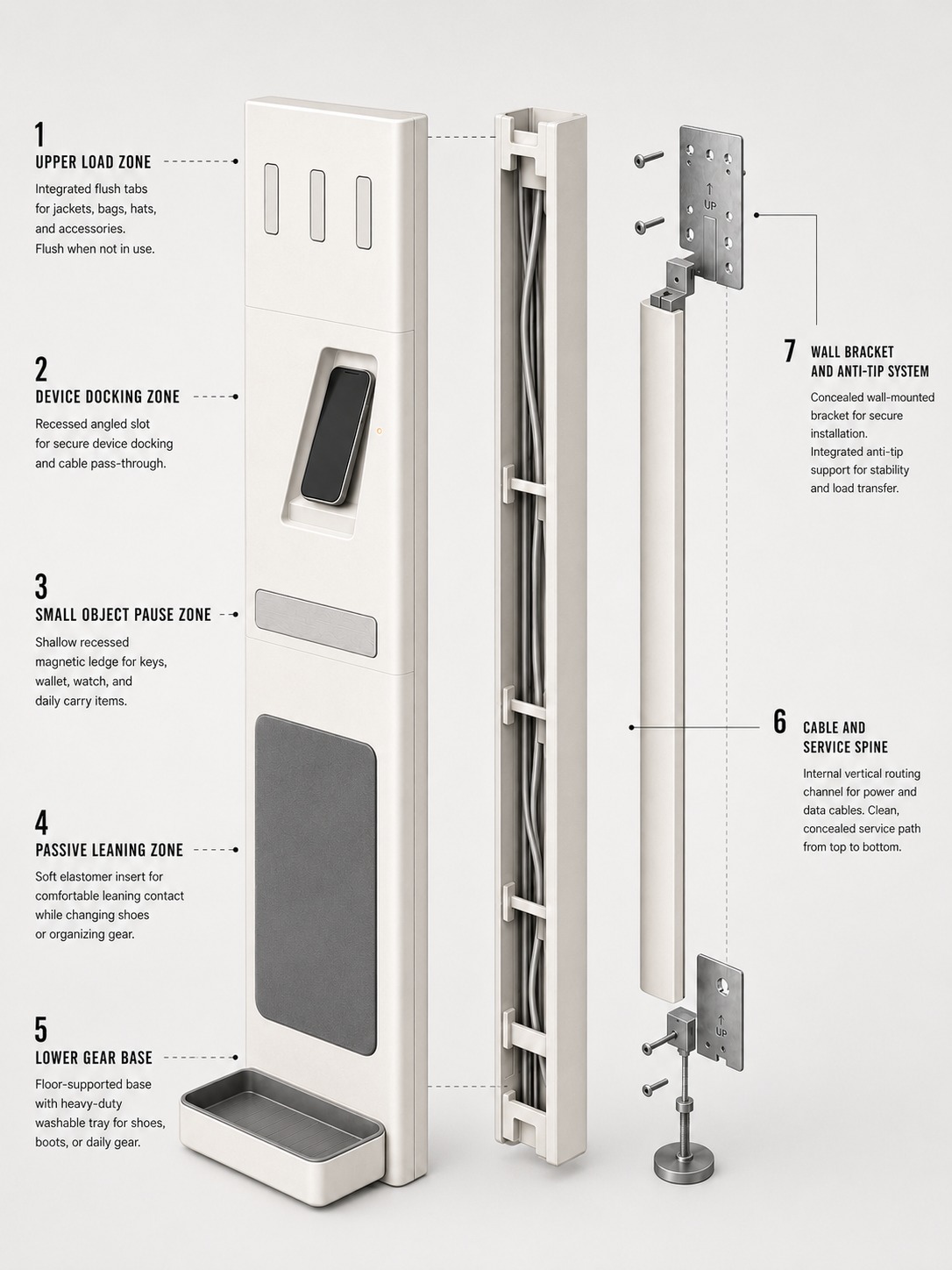
A compact threshold spine organized by zones, service routing, and installation logic.

Exploded module diagram of Vertical Threshold Spine showing upper load zone, device docking zone, small object pause zone, passive leaning zone, lower gear base, cable spine, and wall bracket system.
V2.3 module diagram. The front face is divided into behavioral zones while the rear spine carries cables, bracketry, and anti-tip support.

Functional zones

Each gesture has a defined place, but the object stays visually quiet.

01

Upper Load Zone

Flush tabs support jackets, bags, hats, and accessories without turning the object into a conventional coat rack.

02

Device Docking Zone

A recessed angled slot gives the phone a clear docking behavior, with a concealed cable pass-through behind the surface.

03

Small Object Pause Zone

A shallow magnetic ledge holds keys, wallet, watch, and daily carry items during the transition home.

04

Passive Leaning Zone

A soft elastomer insert supports brief leaning contact while changing shoes or reorganizing gear.

05

Lower Gear Base

A floor-supported washable tray receives shoes, boots, bags, gloves, and wet daily gear.

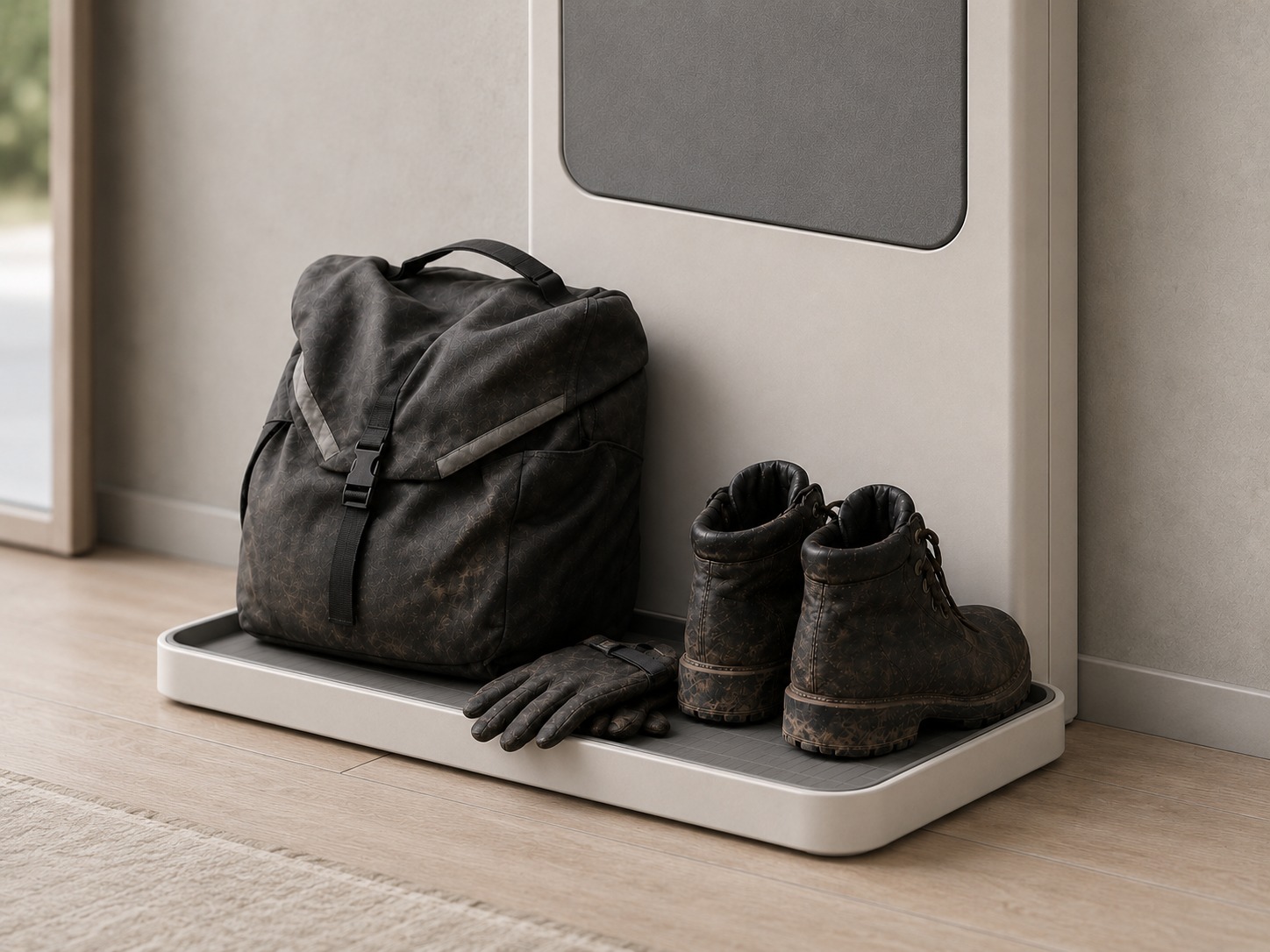
Lower gear base detail of Vertical Threshold Spine holding a black bag, gloves, and boots on a washable tray.
Lower gear base detail. The floor tray gives heavy and dirty objects a dedicated landing area instead of letting the entryway become visual noise.

Grounding detail

The base makes the system feel domestic, not purely speculative.

By bringing weight down to the floor, the object becomes more credible as a wall-adjacent installation. The tray is not only storage; it also explains load transfer, cleaning behavior, and the everyday mess that the product is designed to absorb.

This is the moment where the project becomes less like an architectural fantasy and more like a usable entryway system.

Docking detail

Charging becomes part of the arrival ritual instead of another screen habit.

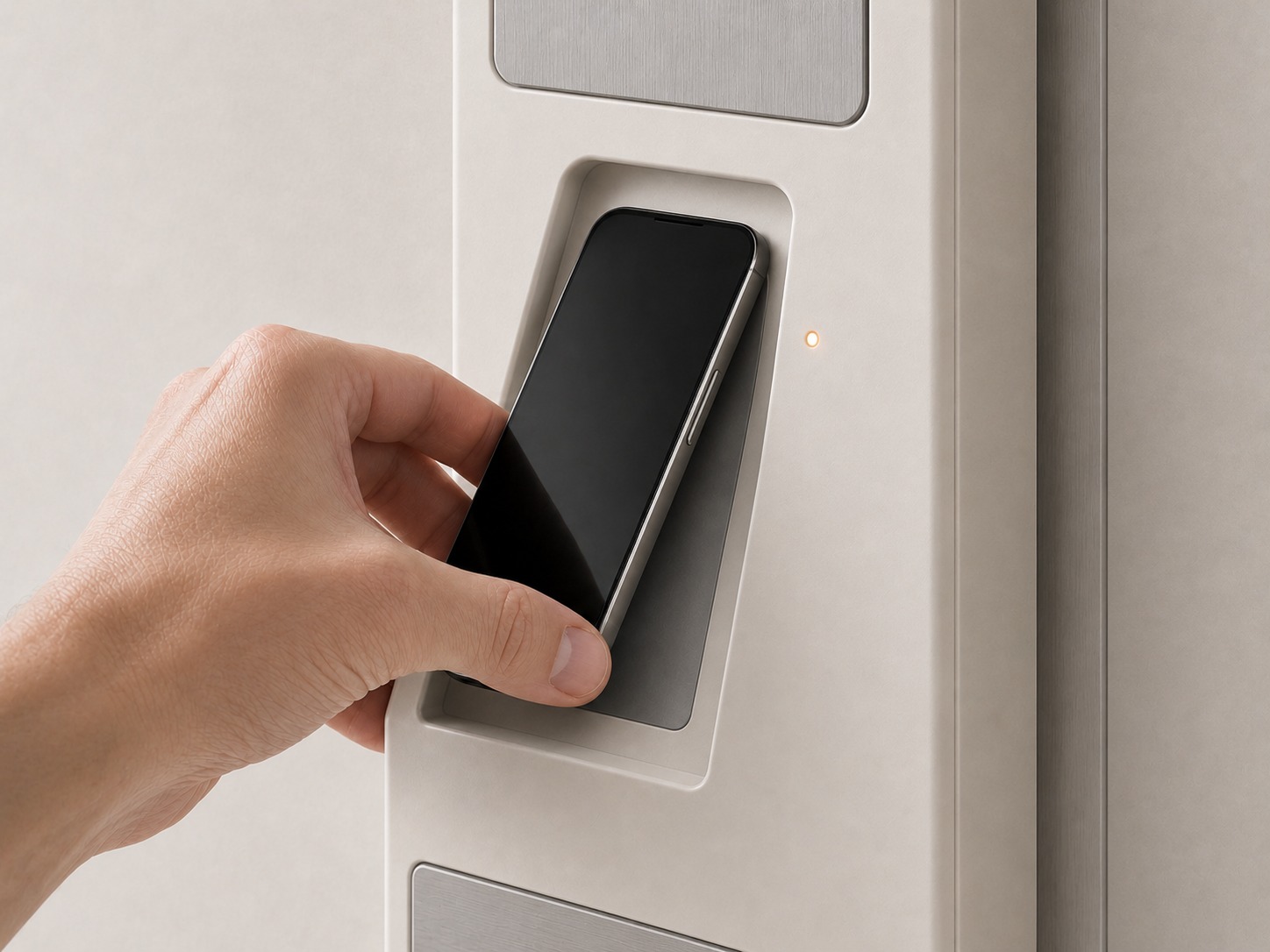
The angled slot gives the phone a precise resting posture. It is visible enough to be useful, but recessed enough to feel calm. The small warm indicator turns the action into a low-noise confirmation rather than a demand for attention.

The gesture is simple: return home, place the device down, and allow the object to hold both the phone and the transition moment.

Close-up of a hand placing a phone into the Vertical Threshold Spine recessed docking slot.
Device docking detail. A contained angled slot supports charging, device parking, and a moment of separation from work notifications.
Installation logic

A serviceable object beside the wall, not a hidden system inside the wall.

The V2.3 direction treats the spine as a surface-mounted domestic object with concealed bracketry, vertical cable routing, and anti-tip support. This keeps the design quiet from the front while making the rear logic more believable.

The wall no longer needs to swallow the product. Instead, the object stands near the entrance as a calm utility spine: architectural in proportion, product-like in use, and practical enough to explain how it could be installed in an apartment threshold.

Material direction

Matte warm white shell, brushed aluminum panels, soft grey elastomer, washable base tray

Design language

Calm technology, infrastructural minimalism, threshold behavior, low-noise domestic utility

Position

Developed concept for compact urban living and post-work decompression rituals